
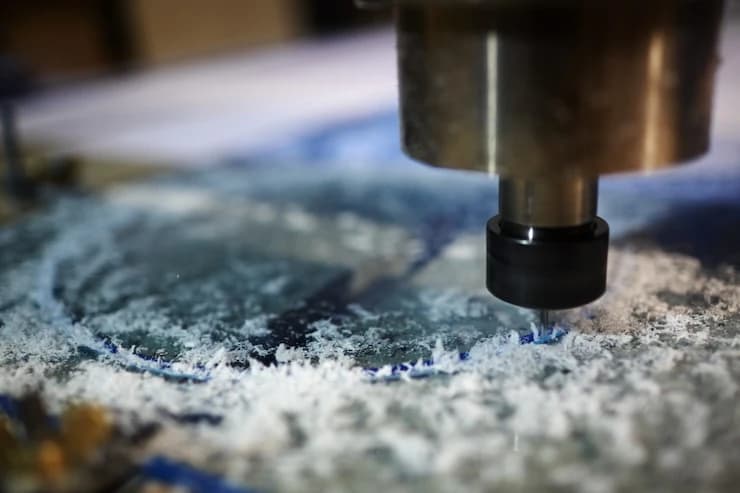
Have you ever looked at two quotes for the exact same part and wondered, "Why is one 5,000 PHP and the other only 500 PHP?"
It can be incredibly confusing. We understand.
Navigating CNC machining costs in the Philippines often feels like a guessing game. If you are a procurement manager or an engineer trying to stick to a budget, these wild price differences can make your job stressful.
Before we dive in, let’s be open about one thing: We specialize in industrial-grade parts.
If you are looking for a cheap replacement part for a DIY hobby project, the online marketplaces might be your best friend. But if you are looking for reliable, high-precision components that won't fail your production line, you are in the right place.
We wrote this guide to be your partner in pricing. We want to pull back the curtain on how machining rates are actually calculated.
More importantly, we want to show you how simple design tweaks can help you lower your own costs—without sacrificing quality.
Ready to demystify your quote? Let’s get started.
1. The Price Formula: What Are You Actually Paying For?
Pricing isn't magic; it's just math. To understand your quote, you first need to understand the two main ingredients: Setup Cost and Run Time.
The "Taxi Ride" Analogy
Think of ordering CNC parts like taking a taxi.
Even if you only ride for 100 meters, you still have to pay the "flag-down rate" (base fare). Why? Because the driver had to drive to you, wait for you, and start the meter.
In CNC machining, this base fare is called the Setup Cost.
Before we cut a single chip, our engineers have to:
Program the machine (CAM).
Design and install the fixtures to hold your part.
Calibrate the tools to zero.
This takes the same amount of effort whether we make one part or one thousand parts.
How Volume Changes Everything
Let's look at the math:
Scenario A (1 Part): Setup (2,000 PHP) + Machining (500 PHP) = 2,500 PHP per part.
Scenario B (100 Parts): Setup (2,000 PHP / 100) + Machining (500 PHP) = 520 PHP per part.
Our Advice: If you are still in the prototyping phase, try to group your orders. Increasing your quantity is the single most effective lever to lower your CNC machining price.
Further Reading: Want to see the full cost breakdown? Check out this guide on Breaking Down CNC Machining Costs to see where every peso goes.
2. Material Selection: Don't Pay for Titanium When Aluminum Will Do
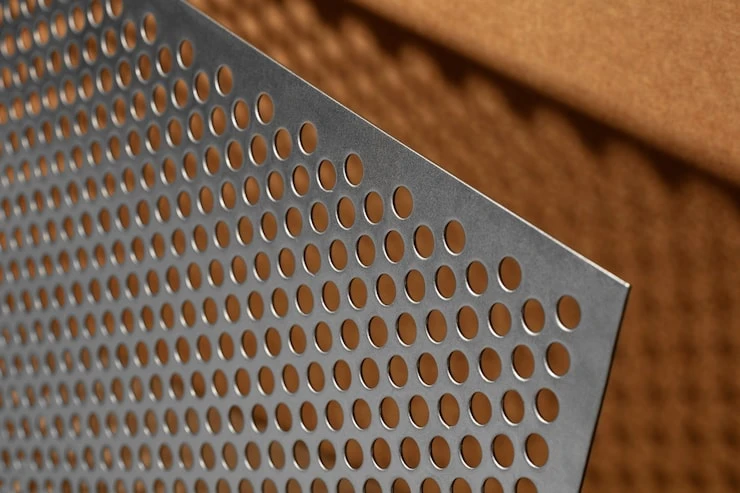
Material cost is the second biggest driver of your CNC machining price. But it's not just about the raw material price tag; it's about "machinability."
The "Hardness" Tax
Many engineers default to Stainless Steel (SS304) just to be safe.
But here is the truth: Stainless steel is hard and gummy. It forces us to slow down our machines and chew through expensive carbide tools.
If your part is just a bracket or a fixture, choosing Aluminum 6061 instead can cut your machining time (and cost) by 50% or more.
The Material Value Checklist:
Here is a quick cheat sheet for the Philippines market:
Aluminum 6061: The king of value. Easy to machine, lightweight, and strong enough for 90% of industrial applications.
Delrin (POM): The budget-friendly choice for non-load-bearing parts. Great for electrical insulation.
Stainless Steel 304: Use only when you absolutely need rust resistance or food-grade compliance. It will cost you double.
Pro Tip: Unless your boss specifically asked for "bulletproof," stick to Aluminum. Your budget will thank you.
Further Reading: Confused about the price difference? Check out this CNC Machining Price Guide & Material Comparison to see a clear "$ vs $$$" breakdown.
3. Complexity & DFM: How to Lower Your Own Price
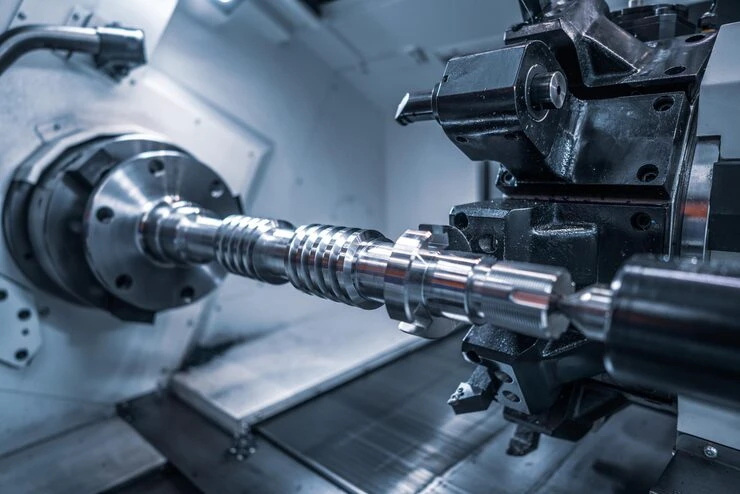
This is the part where many engineers get a headache: "Why did the quote double when I only added one feature?"
Actually, the problem might be hiding in your drawing.
The Hidden "Price Killers" in Your Design
To a CAD designer, a sharp internal corner is just a mouse click. But to a CNC Machine Shop, it’s a nightmare.
Why? Because a rotating round tool cannot cut a perfectly square corner.
To make that sharp corner, we have to use tiny tools (which break easily) or use a completely different process called EDM (Electrical Discharge Machining). This slows everything down and drives your machining rates through the roof.
The "DFM" Money-Saving Checklist:
Want to see your quote drop by 30%? Check your design for these common traps before you send it to us:
Internal Radii: Always add a radius to internal corners. Ideally, the radius should be at least 1/3 of the depth (R > 1/3 Depth).
Deep Holes: Try to keep hole depth under 4x diameter. Anything deeper requires special long drills and runs the risk of breaking.
Tolerances: Don't just copy-paste "±0.01mm" on every dimension. Only apply tight tolerances to critical mating surfaces. Looser tolerances = faster machining = lower price.
Our Promise: If we see a way to make your part cheaper without affecting its function, we will tell you. That’s what partners do.
Further Reading: Want more tricks? Read these 14 Proven Design Tips to Reduce CNC Cost to master the art of cost-effective design.
4. Local Advantage: The Hidden Logistics Cost
Let’s talk about the elephant in the room.
You can probably find a shop overseas (usually in China) that quotes 10% lower than a local CNC machining Philippines supplier.
But before you sign that PO, ask yourself: Is that 10% saving worth the risk?
The Most Expensive Cost is "Waiting"
In the manufacturing world, distance is risk.
Imagine this scenario: You order a batch of parts from overseas. They arrive two weeks later, but... they are stuck in the Bureau of Customs. Or worse, you open the box and realize a dimension is off by 0.5mm.
Now what? You have to ship them back, wait for rework, and ship them again. Meanwhile, your assembly line is dead in the water.
The "Total Landed Cost" Checklist:
A cheap quote often becomes expensive when you add up the hidden fees. When comparing quotes, always calculate:
Shipping Fees: Air freight for heavy metal parts is shockingly expensive.
Customs & Taxes: Don't forget the import duties and the time spent dealing with paperwork.
Communication: Can you drive to their shop to discuss a fix? With us (based in Manila and Laguna), you can.
Our Philosophy: We might not be the cheapest option in the world, but we are the safest option for your timeline. We are right here, ready to react when you need us.
Internal Link: Need parts in a rush? Check out service to see how local agility saved a client’s project.
Stop Guessing, Start Machining
CNC machining costs shouldn't be a black box.
Now that you understand the logic behind the price tag—Setup Costs, Material Choices, and Design Complexity—you have the power to control your own budget.
You don't need to choose between "cheap and risky" or "expensive and safe."
By partnering with a transparent Machining Manufacturer like us, you get the best of both worlds: Industrial-grade quality at a price that makes sense.
Ready to get a quote that actually fits your budget?
Don't let a vague estimate slow down your project.
We don't just give you a number; we give you DFM feedback to help you make your parts better and cheaper.
Contact Yu Cheng PH now. Let’s turn your design into reality—without breaking the bank.